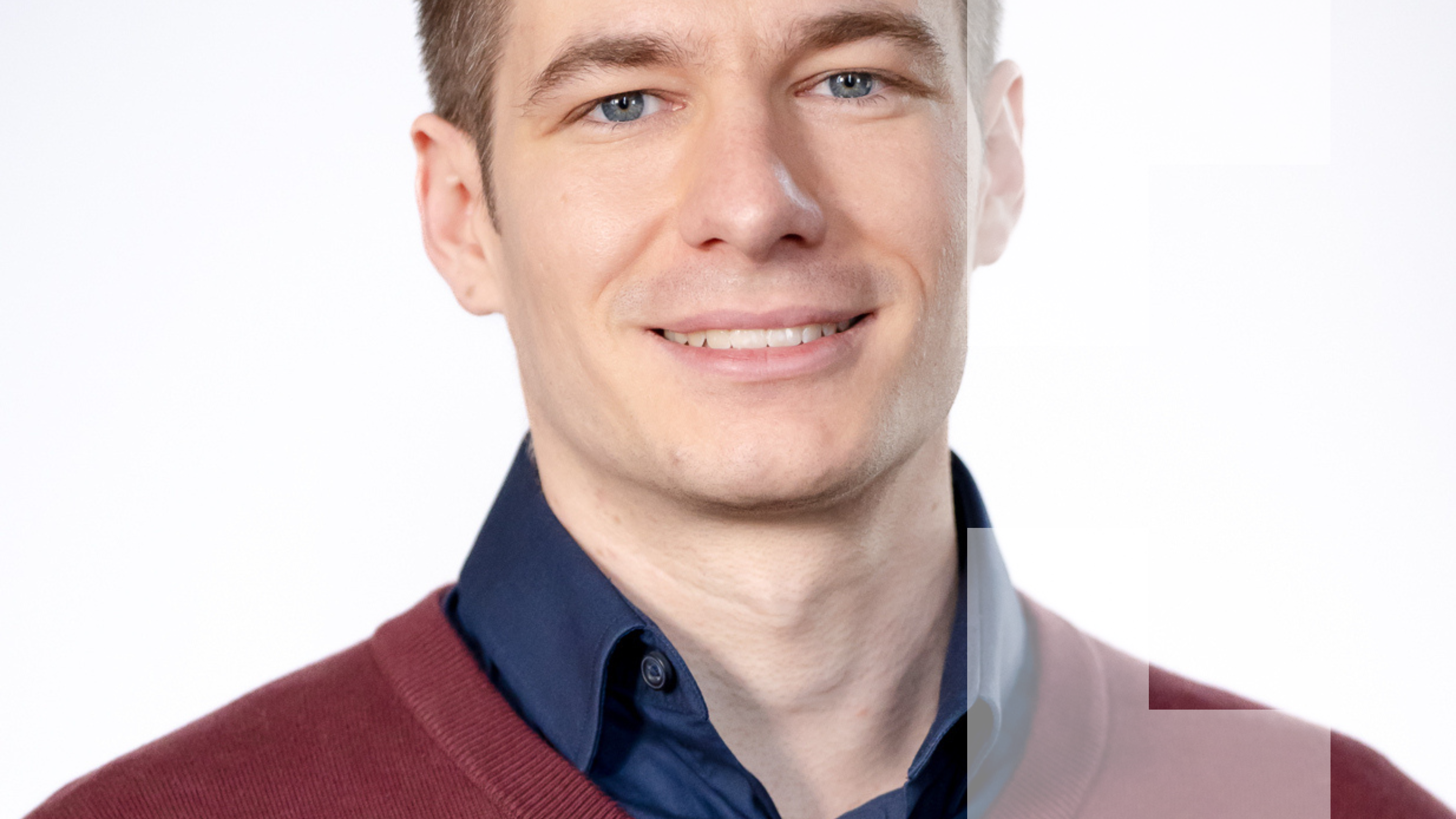
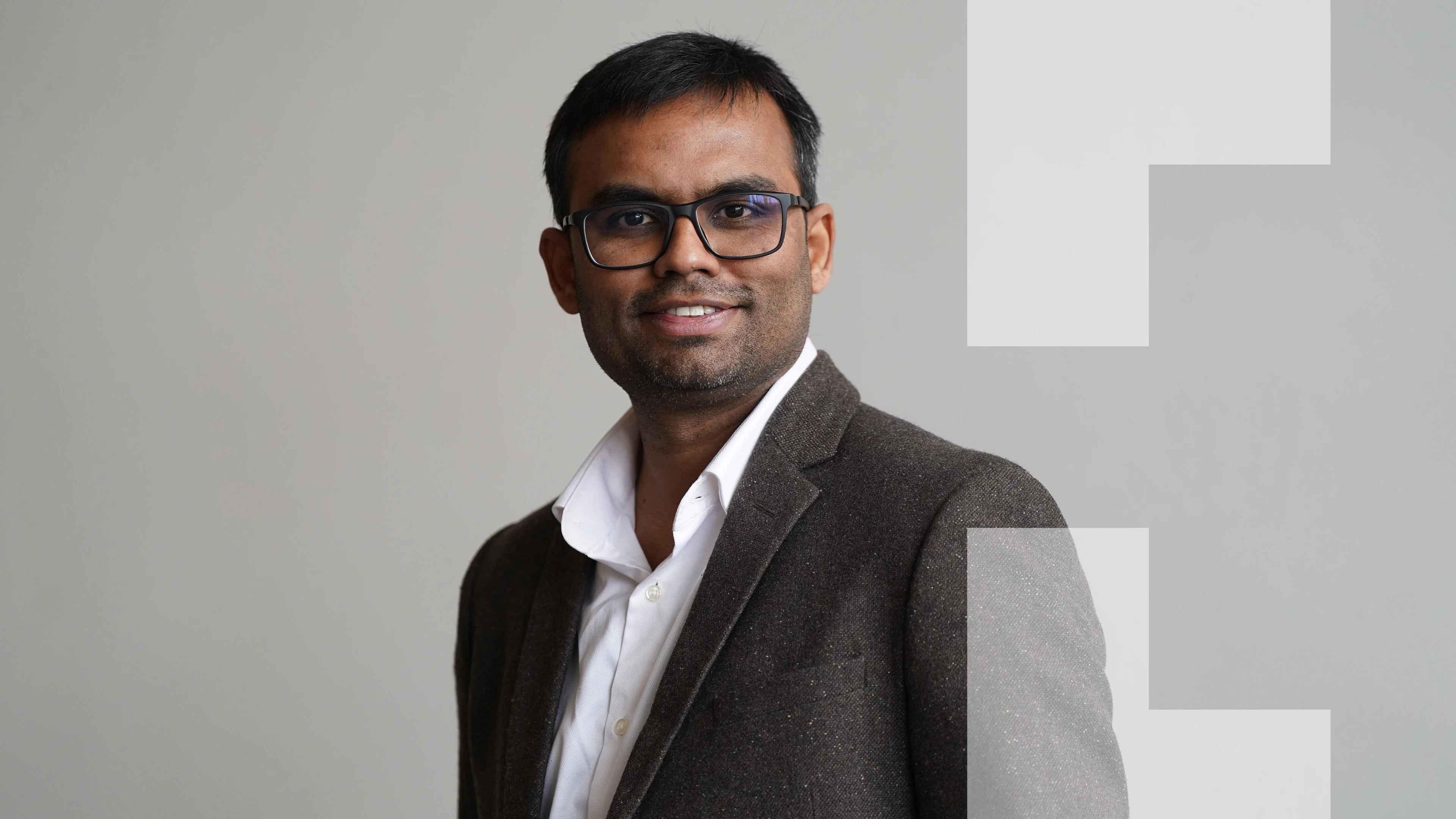
Jit Sarkar's love for patterns led him from medicine to the creation of Catalyst, a platform integrating tumour data with machine learning to predict drug success rates. His participation in the Venture Builder Incubator (VBI) shifted his perspective from selling science to emphasizing value. Mentorship helped refine his commercial thinking and communication skills. Supported by Cancer Research Horizons, Jit is advancing a breast cancer immunotherapy. VBI provided a transformative environment, fostering collaboration and testing ideas, essential for his journey from discovery to patient care.

Venture Builder Incubator
6.0
.webp)
Venture Builder Incubator empowers aspiring founders from Scotland’s universities to start or grow their tech business. Bridging the gap between research and entrepreneurship, Venture Builder Incubator gives you the tools, skills, and support to transform your deep tech or data-driven idea into a thriving startup. Through our ongoing partnership with Cancer Research Horizons, the Venture Builder Incubator provides tailored support to research staff and academics across the UK developing oncology-related data-driven innovations.
Jit Sarkar loves patterns.
“At school I was interested in discovering patterns. Patterns in nature like coral reefs or flowers. I really looked up to Charles Darwin who was trying to see patterns in the Galapagos Islands. It is all about patterns.”
He went on to study medicine at university but, ironically, it was the pattern of daily life as a clinician that forced him to change direction.
“I found the job a bit repetitive. It’s the same drug given to the same set of diseases. It’s working on the known domain and I always wanted to do something in the unknown domain.”
Over time, Jit became increasingly frustrated by a stubborn problem in drug development. Promising discoveries made in the lab often fail to translate into real benefit for patients. Too often, researchers spend years refining experiments without knowing whether what works in mice will have any relevance in humans.
“I realised that a lot of discoveries and research we do in the lab doesn’t make it from the bench to the bedside,” he explained. “We generally miss out the human element of the research which we do in the lab.”
His solution is Catalyst, a software platform which brings together transcriptomic (the set of RNA molecules produced by genes in a cell or tissue at a given time) tumour data and a proprietary machine learning framework. Jit calls the result a ‘digital tumour twin’. Essentially, it identifies Jit’s favourite things - patterns that can help researchers judge whether a drug or treatment regime has a stronger chance of success in real patients.
Jit explains: “Before setting off on a journey you might use an app to plan your route. You want to know which road is fastest, which is smoothest and which is full of problems. So, instead of moving forward blindly, you know from the start you’re heading in the right direction.”
Although Jit’s science is strong, he knew that was not enough. He applied for the VBI.
“I was looking for guidance to understand how a business works and I was amazed that there was a lot of things which I had no clue about,” he said.
For Jit, the programme was not about arriving at a finished outcome but about starting to ask better questions or, more specifically, getting over some long-held assumptions.
“It shaped my thinking and helped me to let go of a lot of preconceptions which I held. I was trying to sell the science,” he said.
“VBI helped me learn that it’s not the science you sell, you sell the value. It taught me how to explain my vision to any audience.”
That change sounds simple, but for someone coming from an academic and clinical background, it was significant. Instead of starting with the research and hoping others would grasp its importance, he learned to begin with the need and to tailor his messaging to its recipient.
“Previously I had a recipe, and I was just trying to feed that recipe to everybody without judging if the recipe was correct for the person I was pitching to.” he concludes.
That sort of practical reframing is at the heart of what VBI is designed to do. A place where people work on their business in real time, rather than simply learning theory in a classroom. It is intended as a starting point for testing ideas, exploring commercial potential and building confidence, particularly for academics who may not initially see themselves as founders.
For Jit, the most valuable parts of the experience were the one-to-one sessions with experienced mentors. Having worked with founders for many years, the mentors could challenge his thinking in a grounded and credible way. The workshops also helped him understand the building blocks of commercialisation, from value propositions to market thinking.
He also praises Cancer Research Horizons (CRH) which, as a partner of VBI, supports researchers and academics working on oncologyrelated deeptech innovations from universities and hospitals across the UK.
But it was being surrounded by others on a similar journey, listening to fellow founders pitch their ideas, talk through their products and approach problems from different angles that really inspired him.
“There’d be 20 other founders standing there and I would be thinking, ‘What is the common pattern which holds true for each of them?’”, Jit said.
That collaborative environment matters because VBI is not just for people who arrive thinking they already have all the answers. The programme is meant to be a safe space to test, validate and explore ideas. Sometimes that leads to building a company, sometimes it leads somewhere else. Either way, the process is valuable.
Asked what he would say to someone considering VBI, his answer was simple. He would show them the slide deck he used before the programme and the one he used after it.
“I’m sure they would be convinced enough by that.”
As for the immediate future, Jit is focused on seeing a new immunotherapy drug for breast cancer through stage one clinical trials. The drug works as a spatial biomarker designed to predict whether a patient with triple negative breast cancer is likely to respond to chemotherapy.
Whether it’s coral reefs or cancer cells, Jit has always been looking for patterns. Now, those same instincts could help unlock a clearer path from discovery to patient care and, ultimately, save lives.
Website: Jit Sarkar



.webp)
.webp)
.webp)

.jpg)
.webp)
.png)

.webp)


.webp)
.webp)


%2520and%2520UofE%2520Business%2520School.webp)
%2520and%2520the%2520Usher%2520Institute%2520(1).webp)
.webp)
Bayes Centre, 47 Potterrow, Edinburgh, EH8 9BT