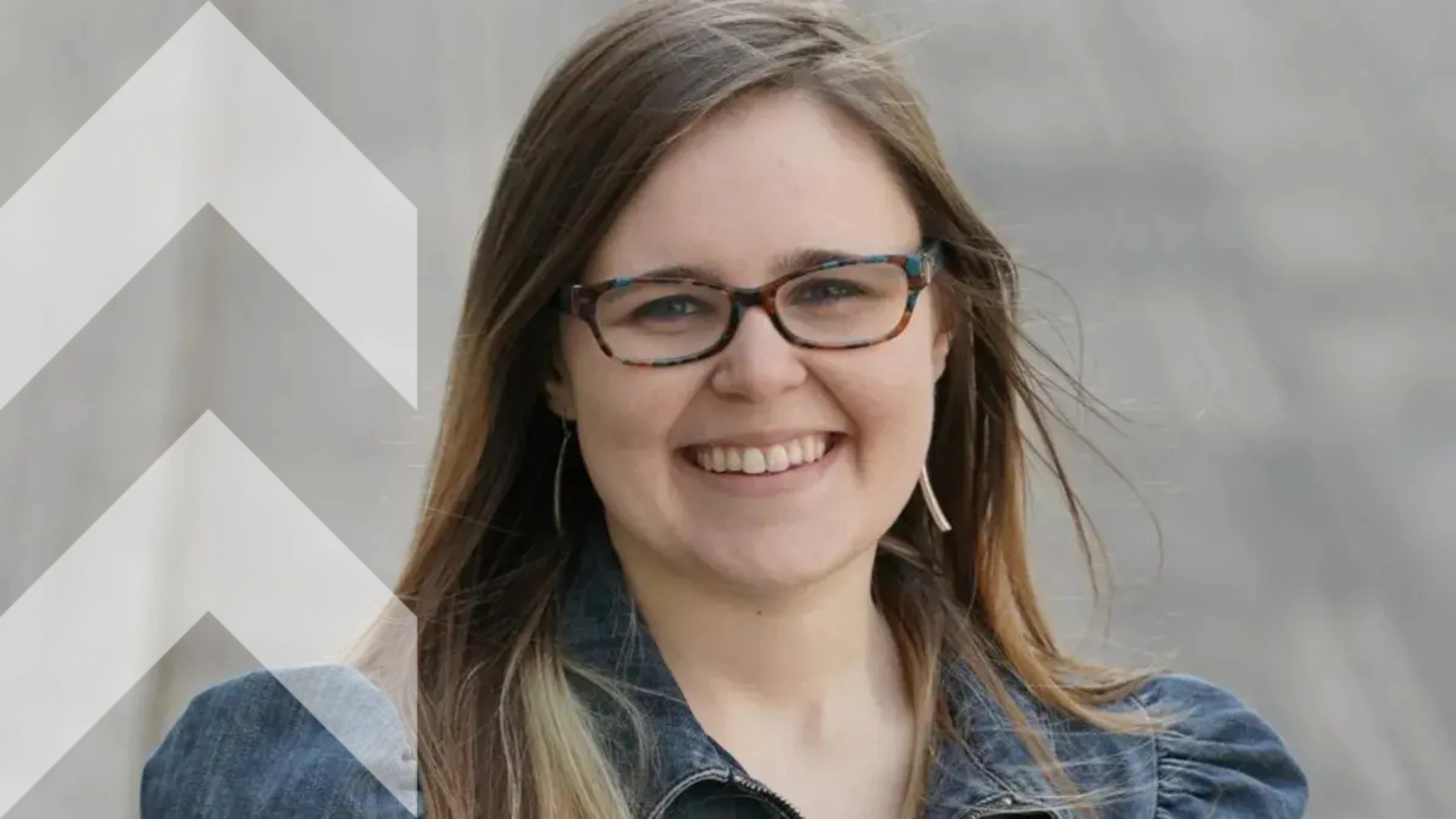
Dr. Nazia Gillani transformed her academic research into a business with MovementGuard, a smart home system that detects early signs of mobility decline in the elderly. After witnessing the impact of falls on her grandmother, Nazia developed technology to provide timely intervention. The Venture Builder Incubator (VBI) helped her navigate the entrepreneurial journey, refine her market strategy, and identify carers and care organizations as key customers. VBI provided essential guidance, support, and confidence, enabling Nazia to turn her innovative solution into a successful business aimed at preserving independence and supporting carers.

Venture Builder Incubator
6.0
.png)
Venture Builder Incubator empowers aspiring founders from Scotland’s universities to start or grow their tech business. Bridging the gap between research and entrepreneurship, Venture Builder Incubator gives you the tools, skills, and support to transform your deep tech or data-driven idea into a thriving startup. Through our ongoing partnership with Cancer Research Horizons, the Venture Builder Incubator provides tailored support to research staff and academics across the UK developing oncology-related data-driven innovations.
Dr Nazia Gillani learnt at a young age just how damaging a fall can be for elderly or vulnerable people.
“My grandmother had dementia and kept falling while getting out of bed. It was only after a big fall that left her with fractures and bruises she told us she had been feeling dizzy for a few days. It was terrible.”
Obviously, dementia was the culprit in her grandmother’s case, a condition the family was aware of, but Nazia says her technology, MovementGuard, can spot more subtle signs of decline much earlier.
“The problem it addresses is silent mobility decline because we as humans are very good adapters,” Nazia explains. “For example, if I’m going to stand up from my chair and I don’t feel strong enough, I will use the armrest. Or when we are climbing stairs, we will use the banister. These are signs of small declines, but they are clinically meaningful, and when they cascade, they can lead to falls and a personal crisis.”
MovementGuard is a smart home system that uses sensing and AI analytics to detect mobility decline earlier, allowing timely intervention and support before a person reaches crisis point. Unlike more reactive systems, it is designed to spot change before a fall happens. It is also non-contact and privacy-preserving, avoiding the intrusiveness of cameras and the limitations of wearables.
Nazia is an electrical engineer and, long before MovementGuard became a business, she had spent years building rehabilitative systems for people with amputations, frailty, falls and stroke. During her PhD, she knew she wanted to focus on mobility and developed a growing understanding built through conversations with the people closest to the problem.
“As part of my PhD I spoke to 60 or 70 stakeholders and it became very clear that there is a problem and an unmet need,” says Nazia.
For individuals, mobility decline can mean a sudden loss of independence, hospitalisation or even a move into residential care. And yet, knowing there was a problem to solve was not the same as knowing how to build a company around it.
“I wanted to be an entrepreneur, but I didn’t know how to be an entrepreneur,” Nazia says. “I knew I had to do something, but I wasn’t sure how to do it.”
That is where the Venture Builder Incubator came in.
For Nazia, VBI was not a classroom exercise or a box-ticking programme, it was the point at which an academic idea began to take commercial shape. It gave her the space to test assumptions, refine her proposition and work on the business in real time. In particular, it helped her understand the market, the buyer and the route to adoption.
“As researchers we only think about a very small problem and do not think at a system level,” she says. “It really helped me refine the problem for different stakeholders.”
One of the biggest surprises was discovering who her first customers were most likely to be. Nazia initially assumed MovementGuard would be bought by older adults themselves but through the programme she realised her beachhead market was actually carers and care organisations.
“That’s because they are ready to pay for it, unlike the older adults. This was surprising for me. Carers called or emailed me during VBI to ask if the system worked and where they could buy it,” she says. “For carers there is very limited visibility between visits so they can miss important signs of decline.”
That kind of learning is exactly what VBI is designed to support. The programme is not about pretending every idea is ready-made for market, but rather about helping academic founders explore commercial potential, validate demand and make informed decisions about what comes next. In Nazia’s case, it helped turn conviction into momentum. She built her advisory team, refined her value proposition and secured funding support for pilots.
The experience changed how Nazia saw herself.
“If my confidence was 10 to 15% before VBI, it is now 100%”.
That transformation is one of the clearest strengths of the VBI programme. It gives academic founders the tools, language and confidence to move from research mindset to commercial mindset without losing sight of the impact they want to make.
For Nazia, the structure of the programme was a major part of that. She describes it as “step by step building one block at a time”, with each stage adding something new. She learned about problem refinement, market segmentation, stakeholder engagement and value proposition. One-to-one support and healthcare-specific sessions on NHS pathways and health economics were particularly impactful for her. As was the guidance and financial support provided by VBI partner Techscaler, experts in founder development.
And the flexibility of the programme is also a major plus point for Nazia.
“For someone trying to start a business time is the most critical thing. VBI’s structure recognises that as it is mostly online with only three in-person events. And those online events are from four to five thirty in the evening, two days a week, so it's very manageable.
In Nazia’s case, the progress has been striking.
“In just five months I travelled from a problem, a theoretical solution and a very small prototype, to incorporation, running a pilot and winning customers. For me it's a total transformation,” she says.
That feels fitting. Because MovementGuard began not with a grand business plan, but with a simple observation about people: that we adapt, often without noticing, until something gives way.
Nazia noticed. VBI helped her turn that insight into a company. And in doing so, it helped turn academic research into something with the potential to protect independence, support carers and change lives.
Website: Dr. Nazia Gillani

.webp)

.webp)

.webp)
.webp)
.jpg)
.webp)
.webp)



.webp)






.webp)
.webp)

%2520and%2520UofE%2520Business%2520School.webp)
%2520and%2520the%2520Usher%2520Institute%2520(1).webp)
Bayes Centre, 47 Potterrow, Edinburgh, EH8 9BT