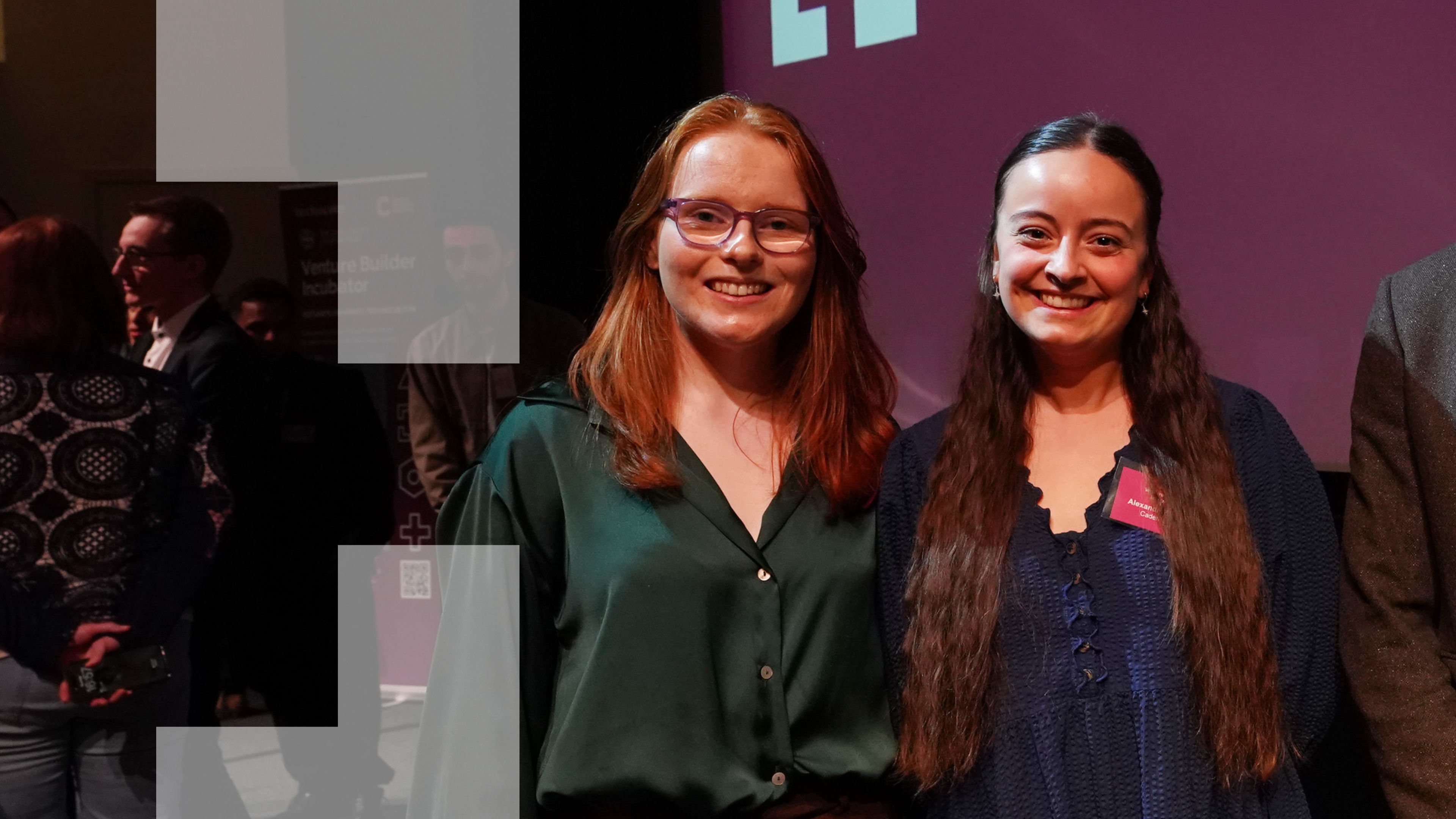
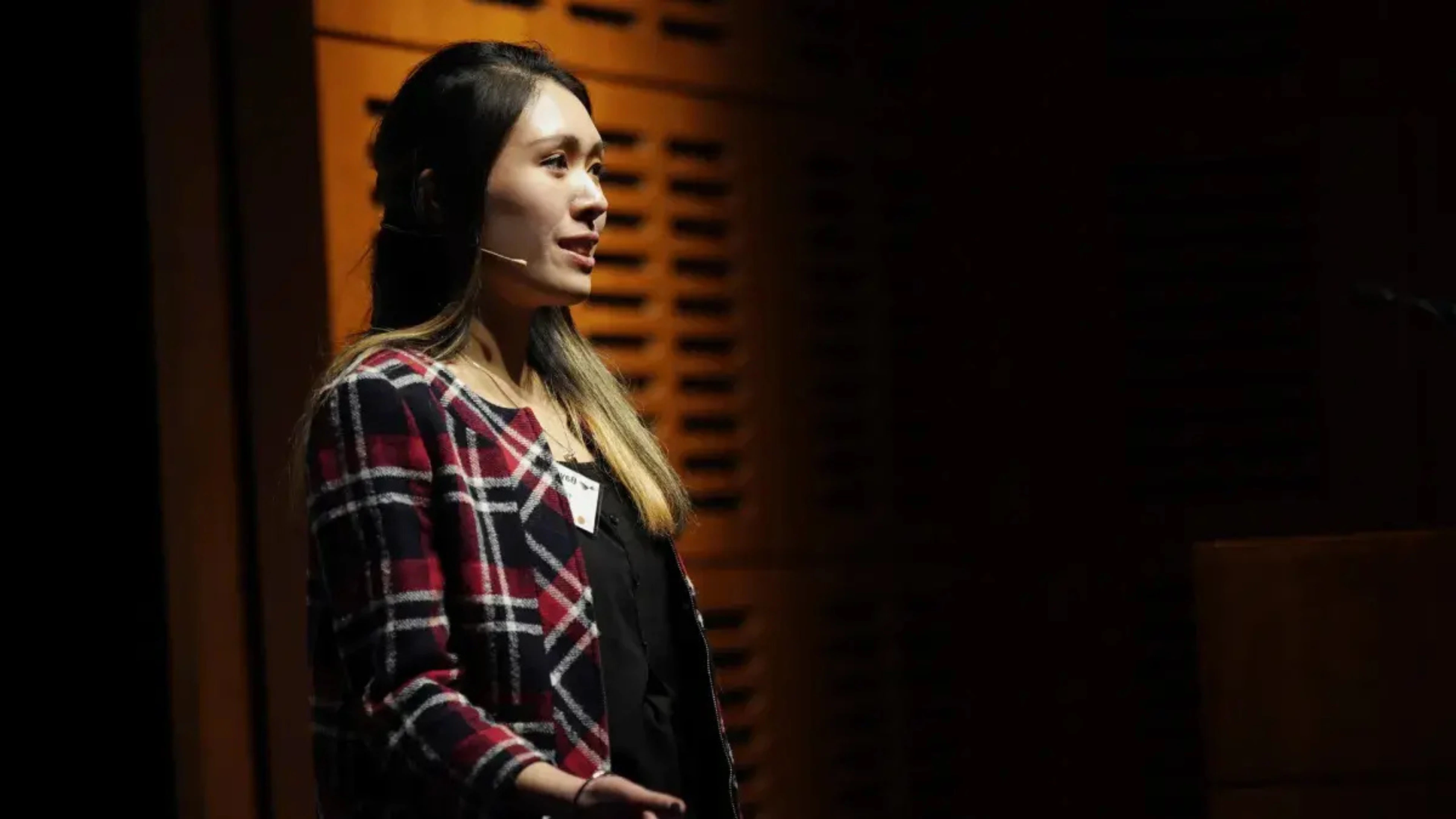
CadenceDx is developing low-cost diagnostic sensor technology designed to detect biomarkers linked to heart attacks, with the aim of bringing faster testing closer to patients and reducing pressure on hospitals. Founder Niamh Docherty joined the Venture Builder Incubator (VBI) during the final year of her PhD, using the programme to explore commercialisation, refine the venture’s value proposition and gain support around areas such as IP, regulation and pitching. What began as academic research has now evolved into an early-stage healthcare venture with a clearer pathway towards real-world impact.

Venture Builder Incubator
6.0
Venture Builder Incubator empowers aspiring founders from Scotland’s universities to start or grow their tech business. Bridging the gap between research and entrepreneurship, Venture Builder Incubator gives you the tools, skills, and support to transform your deep tech or data-driven idea into a thriving startup. Through our ongoing partnership with Cancer Research Horizons, the Venture Builder Incubator provides tailored support to research staff and academics across the UK developing oncology-related data-driven innovations.
For Niamh Docherty, the starting point was not a business idea, or even a clear ambition to build one, but a desire to solve a problem she had already seen up close.
“I had a real problem and a possible solution. I had an uncle who lived in Uist, and he had a heart attack there. Just seeing the challenges, he had to deal with… the system really isn’t built for people that aren’t close to hospitals.”
Her PhD research focused on diagnostic testing, specifically cardiac biomarkers used to detect heart attacks. The science and potential were already there, how to transform them into a viable product was less clear.
In many parts of the country, distance from major hospitals can directly affect outcomes. Access to fast, reliable testing is not always guaranteed, and in some cases, patients are transported long distances simply as a precaution. For Niamh, that raised a fundamental question about whether diagnostics could be delivered differently, closer to where people actually are.
That thinking sits behind CadenceDx.
The company is developing low-cost, easy-to-manufacture sensors designed to detect biomarkers in the body. In simple terms, the technology works in a similar way to a glucose monitor, but instead of measuring blood sugar, it detects proteins linked to conditions like heart attacks.
“We use electrodes to sense the presence of troponin protein,” she explains.
The ambition is not just technical, but practical. If testing can happen closer to patients, clinicians are able to make faster and more informed decisions. It also opens up the possibility of shifting some diagnostic testing away from hospitals and into primary care settings such as GP surgeries or pharmacies, reducing pressure on overstretched services.
Despite the strength of the research, turning that idea into something viable outside the lab was not straightforward.
Niamh was in the final stages of her PhD at Strathclyde University and, like many participants, had not yet fully considered what commercialisation might look like. Thanks to Techscaler’s support of the programme which allows students and academics from across Scotland to join VBI, she jumped at the opportunity.
“I was in my third and final year of my PhD and just trying to get my thesis done. We didn’t really have many goals going in.”
That uncertainty is exactly where the programme comes in.
Rather than acting as a traditional, classroom-based course, VBI creates space for participants to work on their own ideas in real time. It allows them to test assumptions, explore whether there is a genuine commercial opportunity and begin to understand what building something beyond academia might involve.
For Niamh, one of the most significant shifts was moving from a research-led mindset to a more commercial way of thinking.
“The programme really held our hand in turning from research to thinking about it as a venture.”
That shift was reinforced through sessions focused on value proposition and market positioning, helping the team step back and clearly define what they were building and why it mattered.
“It helped us pin down exactly what we’re doing, how we want our product to fit into the market and how we could be adding value.”
Alongside this, the programme introduced areas that are critical in healthcare innovation but often sit outside academic training, including intellectual property, regulatory pathways and pitching.
“We got support around IP, pitching and regulatory considerations. They gave us a really good starting point, contacts and a pathway of what we need to do next.”
Just as important was the environment itself.
VBI brings together individuals at a similar stage, each trying to understand what might come next for their research. That shared experience creates a space where ideas can be explored openly, challenged and refined.
“It might be intimidating, but you’re in a room with people in your exact situation.”
That sense of community, combined with access to mentors and industry perspectives, helps participants make more informed decisions about their direction, whether that leads to building a company, pursuing further research or taking their work into industry.
For CadenceDx, what began as a research project is now moving into a more defined phase.
With the business foundations in place, the focus has shifted to validation, working with clinical samples and continuing to develop a smaller, more portable device that can be used in real-world settings.
“We can now really focus on validation.”
It is a practical step forward, but also a reflection of how the idea has evolved.
VBI is not designed as a final destination. It is the starting point for testing ideas, building confidence and understanding what it takes to turn research into something with real-world impact.
For Niamh, that process has led to new possibilities and a clearer sense of direction.
“You might think you don’t have time, but you do have time. And it’s worth taking that time to think about all the things the VBI team can help you with.”
CadenceDx remains at an early stage, but it is now moving forward with greater clarity, stronger foundations and a clearer understanding of what comes next.
And it all began with a problem that needed solving and the opportunity to explore what might be possible beyond the lab.
Find out more: CadenceDx

.webp)

.webp)
.webp)
.webp)
.jpg)
.webp)
.png)
.webp)



.webp)






.webp)
.webp)


%2520and%2520UofE%2520Business%2520School.webp)

%2520and%2520the%2520Usher%2520Institute%2520(1).webp)
.webp)
Bayes Centre, 47 Potterrow, Edinburgh, EH8 9BT